Shopify Official Website

Shopify

Shopify is the leading global commerce platform, allowing you to start, grow, and manage a business of any size. It provides everything you need to sell online, on social media, or in person. Visit the official Shopify website today and launch your dream store.

Visit Official Website

Shopify for Global Businesses

As the world's leading e-commerce SaaS platform, Shopify empowers millions of businesses worldwide. Whether you're a startup, an established brand, or an entrepreneur, Shopify offers flexible, scalable solutions to build a professional, secure, and multilingual online store.

With strong localization support, Shopify provides fully translated admin interfaces, detailed guides, and community resources. It integrates with popular local payment methods and logistics partners, lowering the barrier to entry for international sellers. The Shopify App Store features thousands of plugins developed globally, covering marketing, ERP, customer service, and more to streamline your operations.

Through the official Shopify website, users can easily sign up for a free trial and quickly set up their online store. The site also offers rich learning resources, success stories, and pricing details to help you choose the right plan. Whether you're starting cross-border e-commerce or expanding your brand globally, Shopify provides stable, efficient technology and ecosystem support.

Visit the Shopify official website to begin your independent store journey and easily reach the global market.

What is Shopify?

Shopify is a complete commerce platform that lets you start, grow, and manage a business. It simplifies online retail by helping merchants build their own branded storefronts, manage inventory, process payments, handle shipping, and more. Today, Shopify powers over 2 million businesses in more than 200 countries, serving everyone from individual artisans to large retail chains with flexible and powerful tools.

Origins & Growth

Shopify was born from its founders' insight into traditional retail. In 2006, three Canadians—Tobias Lütke, Dan Weintraub, and Scott Lake—were developing an online sales system for a snowboard shop when they realized the growing need for digital tools among small businesses. They initially built a simple site-building tool for "Snowdevil," but as demand grew, they decided to commercialize the system, officially launching Shopify in 2006.

Over the years, Shopify has focused on simplifying entrepreneurship. In 2010, it launched Shopify Payments, reducing reliance on third-party payment processors. In 2013, Shopify Plus was introduced for high-growth and large enterprises. Through acquisitions and partnerships—such as Klaviyo and 6sense—Shopify has expanded its ecosystem to offer end-to-end support. By 2025, Shopify has become a global benchmark in e-commerce, driving innovation in online retail.

2006

The Beginning

Tobias Lütke and co-founders started Snowdevil in Ottawa, Canada, to sell snowboarding gear. Dissatisfied with existing e-commerce tools, they built their own framework using Ruby on Rails, laying the technical foundation for Shopify.

2009

Public Launch

After three years in beta, Shopify opened to the public, attracting over 10,000 businesses in its first year and establishing the SaaS e-commerce model.

2010

Ecosystem Expansion

Launched the App Store and API, allowing developers to create plugins and kickstarting the platform's ecosystem strategy.

2015

IPO & Capital Milestone

Listed on the NYSE and Toronto Stock Exchange, raising $131 million in its IPO and reaching a market cap exceeding $2 billion.

2020

Pandemic Acceleration

Benefiting from a global surge in online shopping, Shopify's U.S. market share jumped to 8.6% (second place), with GMV growing 96% year-over-year.

2023

AI Integration

Introduced the AI assistant Sidekick and image editor, enabling automated product description generation and image optimization.

2024

Intelligence Upgrade

Launched the "Shopify Magic" AI suite, including smart copy generation and email automation, covering 70% of core workflows.

2025

The Era of Intelligent Commerce

1. AI Prediction Engine: The new Demand Forecast system integrates 20+ data dimensions like historical sales and social trends, improving inventory prediction accuracy by 40%.

2. Immersive Shopping Experience: AR and 3D modeling enable virtual product interaction, boosting average conversion rates by 27% for partner brands.

3. Global Logistics Network Upgrade: Added smart fulfillment centers in Dubai, Jakarta, and São Paulo, reducing cross-border delivery times to 3.5 days.

4. Sustainable Commerce Initiative: Launched a carbon-neutral certification label, encouraging 100,000+ merchants to adopt eco-friendly packaging and green logistics.

Mission & Recognition

Shopify's mission is to "make commerce better for everyone." This mission is reflected in its product design, company culture, and strategic direction. By lowering technical barriers, Shopify enables entrepreneurs without coding or e-commerce experience to start online businesses, fostering global commercial diversity and inclusivity.

Shopify has received widespread industry recognition. Founder Tobias Lütke was named one of Time magazine's "100 Most Influential People." The platform has been listed by Forbes as one of the "World's Most Innovative Companies" and recognized as a top employer for its support of small businesses and female entrepreneurs. Financially, Shopify's 2015 IPO at a $16 billion valuation made it a standout in Canadian tech. These honors underscore Shopify's commitment to making commerce accessible through technology and an open ecosystem.

Shopify Advantages

As the world's leading SaaS commerce platform, Shopify stands out with its all-in-one solution and numerous technical strengths, making it a top choice for global e-commerce.

  • High-Converting Checkout
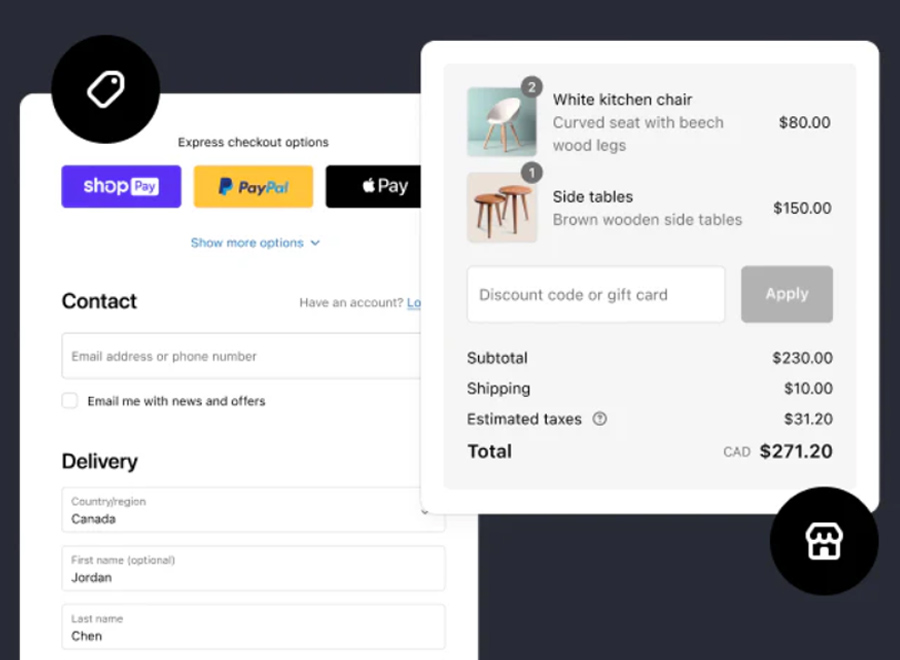
    Shopify's checkout is optimized for conversion, with an average rate 15% higher than other platforms, effectively turning visitors into buyers.
  • Flexible & Powerful Customization
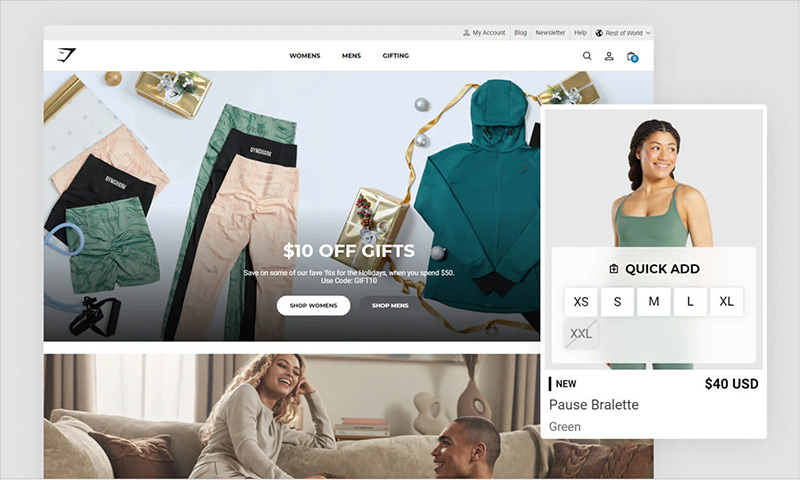
    Choose from 200+ official themes or third-party templates for quick setup, or use Liquid templating and Hydrogen (headless framework) for fully custom storefronts.
  • Globally Stable Infrastructure
    With 300+ global points of presence, Shopify ensures 99.9% uptime. Its fulfillment network covers North America, Europe, and Asia-Pacific, delivering orders in 3–5 business days.
  • Rich App Ecosystem
    The Shopify App Store offers 8,000+ plugins for marketing, logistics, order management, analytics, and more, seamlessly integrating to extend store functionality.
  • Multi-Channel Sales Integration
    Sell seamlessly on Facebook, Instagram, and other social channels directly from Shopify, managing all orders and inventory from one dashboard.
  • Professional 24/7 Support
    Get round-the-clock support via phone, email, or live chat, backed by extensive help documentation and an active community.
  • Built-In SEO & Content Tools
    Optimize for search engines with built-in SEO features, mobile-responsive templates, and customizable meta fields to improve visibility and engagement.
  • Security & Compliance
    Every store includes SSL encryption, and payments are PCI DSS compliant, ensuring secure transactions and building customer trust.

Industry & Media Recognition

Shopify and its products have received widespread acclaim and honors across the industry.

  • Fast Company’s Most Innovative Companies: Shopify has been repeatedly recognized by Fast Company as one of the "World's Most Innovative Companies," ranking #47 in 2016 and #7 in 2020.
  • Hurun Global 500: Shopify has been included in the Hurun Global 500 list multiple times, with its ranking rising over the years (e.g., #63 in 2021, #376 in 2022).
  • Forbes Global 2000: Shopify has also appeared on Forbes' Global 2000 list, reflecting its global scale and financial strength.
  • Note: The above information is based on publicly available data as of October 5, 2025. Shopify's awards and recognition are continually updated. For the most current list, please visit the official Shopify website.

Social Responsibility

As a global technology company, Shopify is committed to social responsibility, focusing on sustainability, community support, and employee well-being alongside business success.

In sustainability, Shopify aims to achieve net-zero across its entire value chain by 2040. Through its "Shopify Planet" initiative, it encourages merchants to adopt eco-friendly practices, offering tools to measure carbon footprints and promoting renewable energy and reduced packaging waste. Shopify’s own operations are already 100% powered by renewable energy.

Through programs like "Shopify for Startups" and "Shopify Bursary," the company supports entrepreneurs with limited resources. "Shopify Gives" donates a portion of revenue to nonprofits and helps charities build online stores to expand their fundraising reach. During the pandemic, Shopify offered free access to advanced features for impacted brick-and-mortar retailers.

Internally, Shopify fosters an inclusive and diverse culture, offering equity incentives, flexible work options, and mental health resources to ensure fair opportunities and support for all employees.

Shopify All-in-One Commerce Platform

Shopify's services cover the entire lifecycle of e-commerce operations.

Online Store

Shopify's core service is helping merchants build and manage a professional online store quickly and easily.

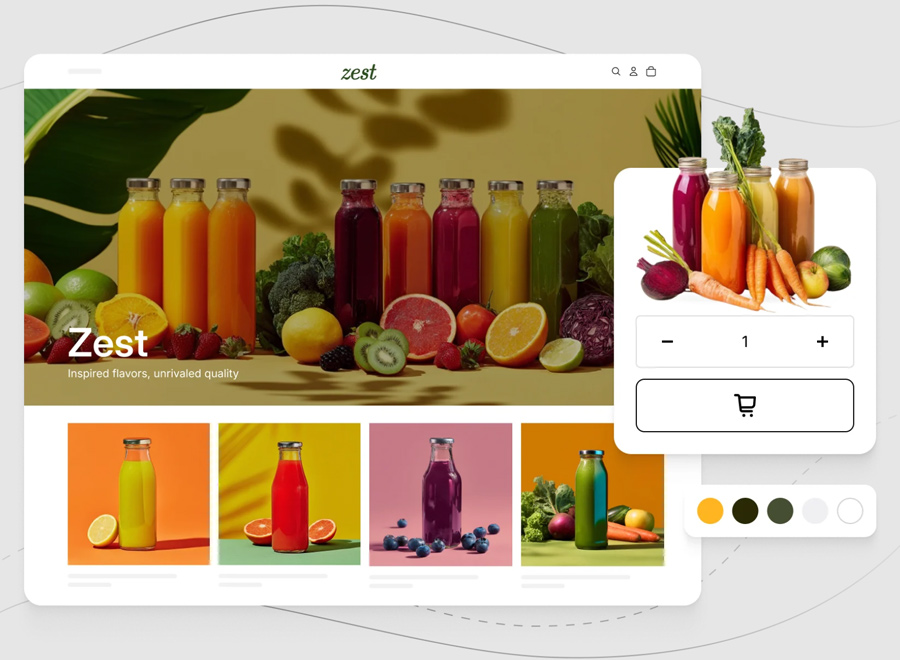
  • Website Builder: A visual admin lets you choose from hundreds of free or paid themes in the Shopify Theme Store, then customize the look and layout with a drag-and-drop editor—no coding required.
  • Unified Admin: Manage products, orders, customers, inventory, and store settings from one intuitive dashboard.
  • Sell Everywhere: Extend your sales channels to social media (Facebook, Instagram), in-person (via POS), and other marketplaces, while managing all orders and customer data centrally.

POS System (Shopify POS)

Shopify POS is a mobile sales system designed to unify online and offline sales.

  • Unified Commerce: Seamlessly connect your online store and physical locations, enabling buy-online-pick-up-in-store, cross-channel returns, and more.
  • Real-Time Inventory Sync: Inventory updates automatically across all sales channels, preventing overselling and stockouts.
  • Payments & Customer Management: Use the POS app on iOS or Android to accept credit cards, cash, gift cards, and manage customer profiles and transaction history.

Payments

Shopify provides flexible, secure payment solutions tailored to merchant needs.

  • Shopify Payments: Shopify's built-in payment gateway lets you accept credit/debit cards directly, avoiding third-party setup and often lowering transaction fees.
  • Third-Party Gateways: Integrate with 100+ external payment providers like PayPal and Stripe from the Shopify App Store if preferred.
  • Multi-Currency Support: Accept payments in 130+ currencies and offer localized checkout experiences to global customers.

Shipping & Fulfillment

Shopify doesn't handle logistics directly but offers a complete solution through APIs and partner integrations.

  • Order Management: Easily print shipping labels, update order status, and track shipments from your admin.
  • API Integrations: Connect with major carriers (UPS, DHL, FedEx) and third-party logistics apps for automated shipping and rate calculations.
  • Logistics Apps: The Shopify App Store includes many logistics and inventory management apps to optimize supply chain, generate labels, and provide real-time tracking to customers.

Marketing Tools

Shopify offers built-in features and thousands of third-party apps for every marketing need.

  • Built-In Features: Create discount codes, gift cards, bundles, loyalty programs, and pop-ups to boost conversions and customer retention.
  • Sell on Social: Connect your store to Facebook, Instagram, and other platforms to sell directly and manage ads from Shopify.
  • App Store Extensions: Install marketing apps from the Shopify App Store for advanced SEO, email automation (e.g., Klaviyo), ad management, and customer behavior analytics.

Analytics

Shopify provides powerful analytics to help you make data-driven decisions.

  • Built-In Reports: The "Overview" and "Reports" sections show key metrics (sales, orders, customer acquisition cost) with real-time data and visual charts.
  • Third-Party Integration: Connect with Google Analytics, Kissmetrics, Mixpanel, etc., for deeper insights into user behavior, funnel analysis, and customer lifetime value.

App Store (Shopify App Store)

The Shopify App Store is central to the platform's ecosystem, dramatically extending core functionality.

  • Extend Functionality: Choose from 8,000+ apps covering virtually every e-commerce need: order management, inventory, customer support, marketing, finance, and more.
  • Flexible Pricing: Apps typically use subscription models with free or paid tiers, billed monthly.
  • One-Click Installation: Install any app directly from your admin; they integrate seamlessly with Shopify's core system.

Customer Support

Shopify offers comprehensive professional support to keep your business running smoothly.

  • 24/7 Technical Support: Get help via the Help Center, live chat, email, or phone—anytime, anywhere.
  • Global Support Teams: Shopify's support teams are located worldwide, providing multilingual assistance for local operational issues.
  • Partner Network: Through the Shopify Partners program, access certified developers, designers, and marketing experts for custom solutions.

How to Sign Up for Shopify

Shopify provides powerful tools to build and grow your online store. Signing up is the first step. Below is an optimized step-by-step guide to help you get started quickly and efficiently.

Step 1: Visit the Official Shopify Website

Open your browser and go to the official Shopify website (search "Shopify official website" if needed). On the homepage, click the prominent " Start free trial " button to begin.

An even easier way is to click the button below, which takes you directly to the sign-up page.

Start Your Free Shopify Trial

Step 2: Enter Your Information

On the sign-up page, provide the following details to create your account:

  • Email Address: A valid email for account confirmation and important notifications.
  • Password: Create a strong password with uppercase, lowercase, numbers, and symbols.
  • Store Name: Choose a name for your store. This will generate your initial Shopify subdomain (e.g., yourstore.myshopify.com).

Click " Create your store " when done.

Step 3: Complete Store Details

After signing up, you'll be guided through a short questionnaire to help Shopify personalize recommendations.

  • Store Address: Enter your full business or personal address, phone number, and country. This is used for orders and payments.
  • Business Information: Answer questions like "Are you already selling?" and "What is your main sales channel?" to get relevant tool suggestions.

Step 4: Enter Admin & Start Building

Once details are submitted, you'll enter the Shopify admin—your store's control center. Here you can:

  1. Choose & Customize a Theme: Go to Online Store → Themes, pick a free or paid template, then customize colors, fonts, layout, and upload your logo.
  2. Add Products: Go to Products → Add product, fill in titles, descriptions, prices, images, and inventory details.
  3. Set Up Payments & Shipping: Configure payment methods (credit cards, Shopify Payments) and shipping options (rates, return policies).
  4. Explore the App Store: Visit the Shopify App Store to add marketing, customer-service, or analytics apps.

Step 5: Use Your Free Trial

Shopify offers a 14-day free trial. Use this time to explore all features at no cost. After the trial, choose a paid plan to continue. Popular plans include:

  • Basic Shopify: $29/month – great for new and small stores.
  • Shopify: $79/month – more staff accounts and advanced features.
  • Advanced Shopify: $299/month – designed for scaling businesses needing advanced reporting.

Frequently Asked Questions (FAQ)

  • Can I use Shopify in my language?
    Yes. Shopify supports many languages. You can change the admin language in Settings and add product descriptions and customer service info in your local language.

  • Do I have to pay after the trial?
    Yes. To keep your store active, you must choose a paid plan before the trial ends. Otherwise, your store will be paused.

  • Can I change my store name?
    Yes, you can update your store name in Settings → Store details. However, the initial myshopify.com subdomain (e.g., oldname.myshopify.com) usually cannot be changed. For a custom domain (like www.yourbrand.com), you can purchase one separately.

  • Do I need a registered company to open a Shopify store?
    No. Shopify supports both personal and business accounts. You can use your personal address. However, registering a company can enhance professionalism and credibility, especially for B2B sales.

Complete Guide to Opening a Shopify Store

Learn how to easily create, manage, and optimize your online store—no matter your business size.

Step 1: Sign Up & Prepare

  1. Create Your Account

    • Visit the Shopify official website, click " Start free trial ".
    • Enter your email address, password, and store name to complete registration.
    • Note: You’ll need a credit card that accepts USD charges or a verified PayPal account to pay monthly fees after the trial. The 14-day free trial lets you fully set up and test your store.
  2. Choose a Plan

    • Shopify offers several pricing tiers (Light, Performance, Plus, etc.). Select one that fits your business needs.
    • You can upgrade or downgrade anytime during the trial. The lowest paid plan starts at $29/month with full store features.

Start Free Trial

Step 2: Build Your Online Store

  1. Add Products

    • In your admin, go to " Products ", then click " Add product ".
    • Fill in product title, description, price, inventory, and upload high-quality images.
    • Organize products using collections or tags to help customers browse.
  2. Pick & Customize a Theme

    • Go to " Online Store " → " Themes " to browse free and paid templates.
    • Choose a theme that matches your brand, then use the editor to adjust colors, fonts, layout, etc.
  3. Set Up Payments & Shipping

    • Payments: Go to " Settings " → " Payments " to add credit-card gateways, PayPal, etc.
    • Shipping: In " Settings " → " Shipping and delivery ", define shipping zones, rates, and methods (by weight, region, etc.).
  4. Buy & Connect a Domain

    • Buy a Domain: Purchase one directly through Shopify or use an existing domain from providers like GoDaddy, Namecheap, etc.
    • Connect Domain: If using a third-party domain, follow Shopify’s instructions to point its DNS records to your store.

Step 3: Launch Your Store

  1. Remove Password Protection

    • In your store settings, turn off " Password protection " to make your store public.
  2. Final Testing

    • Before going live, thoroughly test key functions:
      • Checkout Process: Simulate a purchase to ensure the checkout flows smoothly.
      • Payment Methods: Confirm all payment gateways work correctly.
      • Shipping Settings: Verify that shipping rules apply as expected.

Step 4: Promote & Operate

Shopify doesn’t bring traffic automatically; success depends on how you promote your store.

  1. Search Engine Optimization (SEO)

    • Optimize page titles, product descriptions, and image alt-text to rank higher on Google and attract organic traffic.
  2. Social Media Marketing

    • Promote products on Facebook, Instagram, etc. Engage with potential customers and drive them to your Shopify store.
  3. Email Marketing

    • Collect customer emails through promotions, then use Shopify’s tools or third-party apps to send newsletters, coupons, and new-product alerts to boost loyalty and repeat sales.

Shopify Pricing Plans

Shopify uses a subscription-based model with tiers for different business sizes. Core plans include:

Shopify Annual Plans (Save 25%)*

Billed annually (save 25%)*
Plan Best For Price Card Rate Key Features Special Offer Action
Basic Solo entrepreneurs $20/month 2% + 30¢ online
  • 10 inventory locations
  • 24/7 chat support
  • Sell in person with POS
$1/month for first 3 months Try Free
Grow Small teams $49/month 1% + 30¢ online
  • 10 inventory locations
  • 24/7 chat support
  • 5 staff accounts
  • Sell in person with POS
$1/month for first 3 months Try Free
Advanced Scaling businesses $299/month 0.6% + 30¢ online
  • 10 inventory locations
  • Priority 24/7 support
  • Localized storefronts per market
  • 15 staff accounts
  • Sell in person with POS
$1/month for first 3 months Try Free
Plus High-volume & complex businesses $2,300/month Custom rates for high-volume
  • 200 inventory locations
  • 24/7 priority phone support
  • Localized storefronts per market
  • Unlimited staff accounts
  • Fully customizable checkout
  • Up to 200 POS Pro locations
  • Wholesale / B2B
1- or 3-year term options Contact Sales

Shopify Monthly Plans

Billed monthly
Plan Best For Price Card Rate Key Features Special Offer Action
Basic Solo entrepreneurs $27/month 2% + 30¢ online
  • 10 inventory locations
  • 24/7 chat support
  • Sell in person with POS
$1/month for first 3 months Try Free
Grow Small teams $65/month 1% + 30¢ online
  • 10 inventory locations
  • 24/7 chat support
  • 5 staff accounts
  • Sell in person with POS
$1/month for first 3 months Try Free
Advanced Scaling businesses $399/month 0.6% + 30¢ online
  • 10 inventory locations
  • Priority 24/7 support
  • Localized storefronts per market
  • 15 staff accounts
  • Sell in person with POS
$1/month for first 3 months Try Free
Plus High-volume & complex businesses $2,300/month Custom rates for high-volume
  • 200 inventory locations
  • 24/7 priority phone support
  • Localized storefronts per market
  • Unlimited staff accounts
  • Fully customizable checkout
  • Up to 200 POS Pro locations
  • Wholesale / B2B
1- or 3-year term options Contact Sales

Contact Shopify

Below are Shopify’s contact details and social media channels for your reference.

Contact Information

Recommended: Use the Help Center in Your Shopify Admin

This is the most reliable and personalized way to get the correct phone number and contact channels for your region.

  • Path: Log into your Shopify account → click your username in the top-right → select " Help Center ".
  • You’ll Find:
    • Live Chat: Fastest way to get help.
    • Email us: For detailed inquiries.
    • Call us: Here you’ll see the official phone number for your country, which is more accurate than any static list.
      Alternative: Visit the Shopify Website
      You can also go to the official Shopify website and look for contact links in the footer under "Support" or "Contact us".

General Contact Options

  • Phone:

    • Shopify provides 24/7 phone support:
      • US & Canada: 1-888-746-7439
      • International: 1-613-241-2828
  • Headquarters Address:

    • Shopify’s global headquarters:
      • 151 O'Connor Street, Ground floor, Ottawa, Ontario, K2P 2L8, Canada

Social Media